
Interested in coming to New Zealand?
Sign up to receive relevant job opportunities from New Zealand employers and practical advice on how to make your move to New Zealand a reality.
Prices vary throughout the country, with higher prices in the main centres.
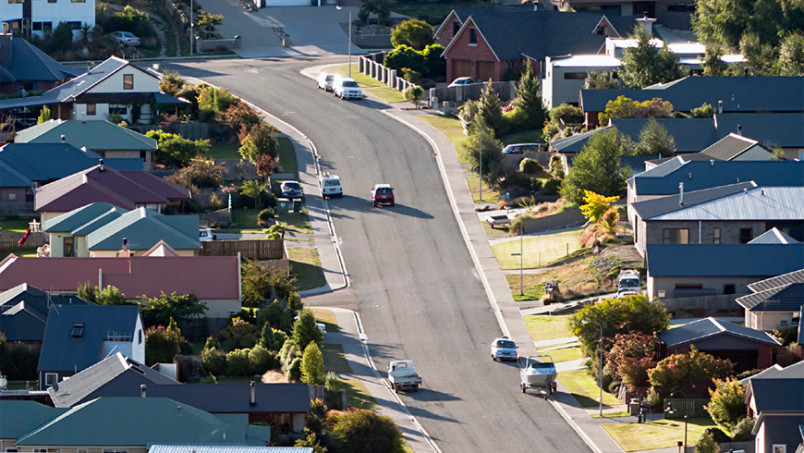
In New Zealand, rent is advertised as a weekly price, rather than monthly.
You can find rental properties by contacting landlords directly or you can go through a letting agent, for example a real estate agent. Letting agents act as agents for landlords when granting or assigning a tenancy.
You can also check websites like TradeMe Property - a popular privately operated website with lots of rental properties advertised. This will give you an overview of rents and the types of rental properties available in the area you are considering.
There is high demand for good places, so it pays to make contact quickly.
Residential property | TradeMe
Find out what you need to know when you are starting a new tenancy.
A tenancy agreement is a legal requirement for renting a property. If you are looking for rental accommodation, you can choose between fixed-term agreements and periodic agreements.
It is a good idea to look around when looking for a rental property. As in every country, the cost of rent depends on the quality, location and size of the property.
In August 2018, TradeMeProperty reported that the national median weekly rent for a small house (1 to 2 bedrooms) was NZ$390 a week, and NZ$525 for 2 to 4 bedrooms.
Prices for rentals vary throughout the country. Main centres usually have higher prices. In 2018:
To find out more about market rent - what renters typically pay in specific areas - check the Tenancy Services website.
Market rent | Tenancy Services
It is important that you pay your rent on time. Even if there is a problem with the property or the landlord is not doing what they should, you must continue to pay rent.
If you do get behind in rent, landlords still have to meet their responsibilities for maintenance and they must follow the correct process to end a tenancy.
If you are living with other tenants you are all responsible for paying any overdue rent, even if only one tenant is not paying as they should.
If you are living with people who are not named on the tenancy agreement, then they are classed as ‘flatmates’. The tenant named on the agreement is responsible for paying the full rent to the landlord. The flatmates must pay their share to the named tenant so they can pass it on to the landlord.
When you first rent a property, you may need to pay rent in advance and a bond. This could bring your total first payment to 5 or 6 weeks' rent.
If you are not sure whether or not to rent a property, the landlord may ask you for an 'option fee' to hold the property while you decide.
Landlords and their agents (eg real estate agents, solicitors) cannot charge you fees (money other than rent or bond) for granting you a tenancy or making changes to a tenancy. These fees are called letting fees and key money.
Rent, bonds and bills | Tenancy Services
If you are renting, the landlord is responsible for insuring the building and paying local council taxes (rates).
Tenants are responsible for:
Sharing a house with 1 or more friends, workmates or strangers is called ‘flatting’. Flatting is common in New Zealand and often suits younger people. The people you live with are called ‘flatmates’ (or ‘flatties’).
The good thing about flatting is you can live with people who know the local area and you do not have to buy all the furniture and appliances yourself.
People looking for flatmates usually advertise on TradeMe in the ‘Flatmates wanted’ section.
When you go flatting, you are really renting a room. The cost of a room can vary widely. It depends on the type of property, the size of the room on offer and the location.
You will also need to pay for things like power and food. In some flats, everyone shares the cooking and the costs of buying food. In others, everyone buys and prepares their own food. The cost of things like electricity is shared between the flatmates.
If you move into a flat, you should work out agreements about paying for rent, food, electricity bills and notice periods before you move in. You may find it useful to have these agreements in writing and to keep receipts for any payments you make.
You will find advice about flat sharing agreements and other matters to consider when sharing accommodation on the Tenancy Services website.
Landlords must make sure all rental homes have insulation in the ceiling and under the floor, where it is reasonably practicable to install. Insulation must meet the required standards. The Tenancy Services website has more information.
If you have a problem with your rental, like a water leak or a broken lock, the best way to sort it out is by talking to the landlord first.
Make sure you learn about the rights and responsibilities of the landlord and the tenant so you both know what you should be doing. You can find this information on the Tenancy Services website and in the ‘Renting and you’ booklet (in 15 languages).
Good communication is important.
If you reach an agreement:
If you are unable to reach an agreement, you can send a Notice to Remedy to your landlord. This is a letter making a formal request to the landlord. You can find a template on the Tenancy Services website.
If a formal request does not solve the problem, Tenancy Services offers Fast Track Resolution or mediation. Or you can apply for a hearing at the Tenancy Tribunal.
Find more information about disputes on the Tenancy Services website.
Flatmates sometimes have disagreements about flatting arrangements. If these cannot be resolved between the flatmates, the Disputes Tribunal can help settle the matter – it deals with small claims.
If your tenancy has no fixed end date (a periodic tenancy) you or your landlord must ‘give notice’ to end it. This means letting each other know in advance that you want to end the tenancy.
A notice to a landlord to end a tenancy must:
A notice from a landlord to end a tenancy must:
If you have a fixed term tenancy, giving notice is not an option. However, there are ways to end it early.
Either of you can give notice to end the tenancy at the end of the term - but rules apply to protect both parties. Also, some rules for fixed term tenancies over 90 days changed on 11 February 2021.
For agreements dated before this, if either party wants to end the tenancy, you or your landlord must give notice between 90 and 21 days before it ends.
For agreements on and after 11 February 2021, tenants wanting to end the agreement must give a minimum 28 days notice in writing, and landlords must provide notice using the same rules as for periodic tenancies.
In all cases, unless there is a prior agreement, a fixed term tenancy of more than 90 days automatically becomes a periodic tenancy and then the rules for periodic tenancy apply.
You can find more information on the Tenancy Services website. There is an easy-to-use tool to help you reach the right outcome for your situation.
Giving notice to end a tenancy | Tenancy Services
Tenancy Services is the government’s advisor on all aspects of rental tenancies in New Zealand. Tenancy Services sits within the Ministry of Business, Innovation and Employment (MBIE).
Tenancy Services’ produces a guide to tenancy law for landlords and tenants called Renting and you. There is also a simplified version called Short guide to good renting. Both guides are available in English and other languages.
Tenancy Services also offers:
Phone helpline | Tenancy Services
Renting and you - a guide to the law about renting | Tenancy Services
Sign up to receive relevant job opportunities from New Zealand employers and practical advice on how to make your move to New Zealand a reality.